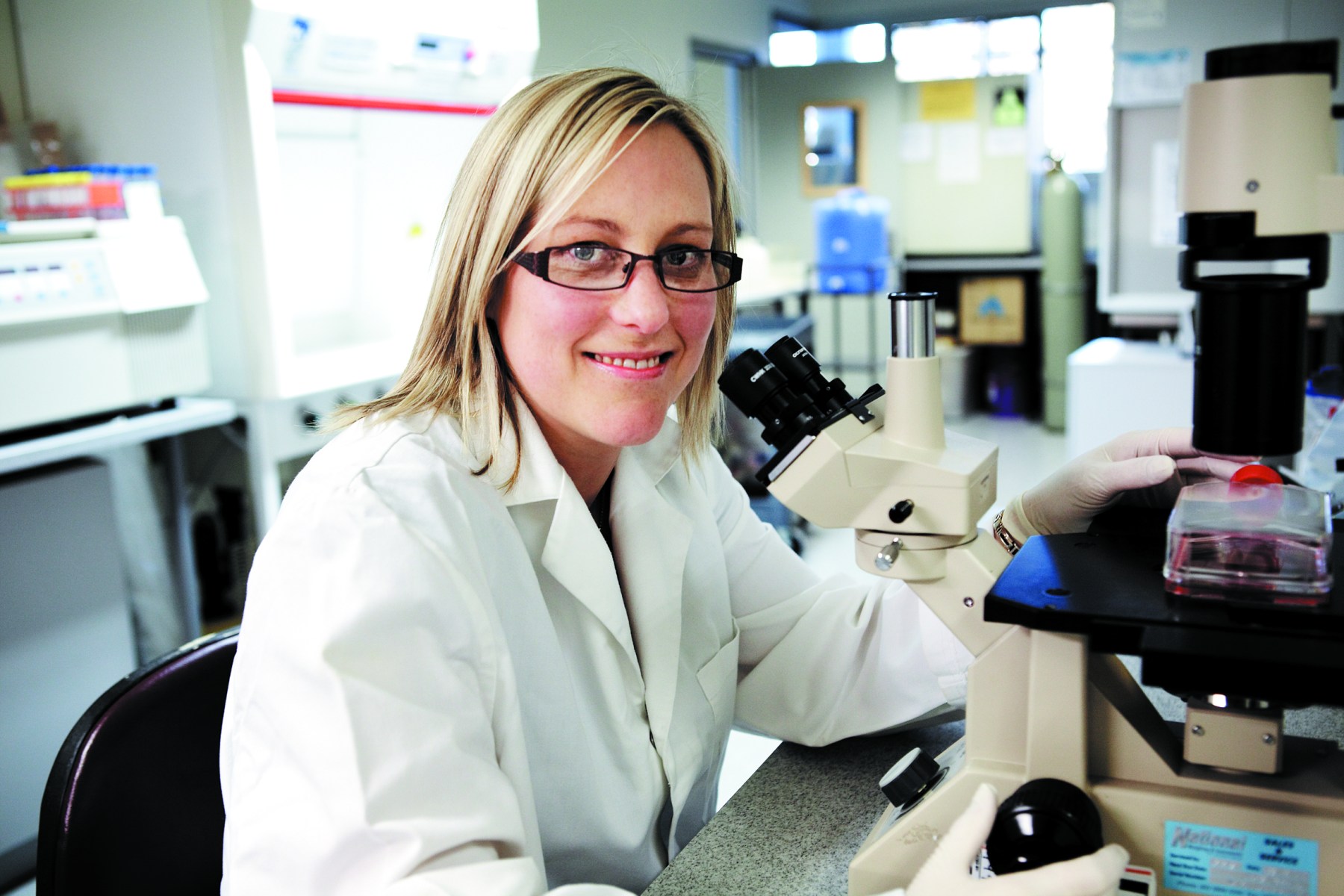
A University of Newcastle cancer researcher has secured almost $600,000 to purchase advanced technology that isolates individual living cancer cells with exceptional precision.
Professor Nikki Verrills has been awarded a Cancer Institute NSW Research Equipment Grant to buy a CellenONE system, which allows researchers to capture subtle differences between individual cells within a tumour. The capability is expected to help teams across NSW identify cancer cells that resist therapy and better understand why relapse occurs.
Professor Verrills and her team will use the equipment to support research into blood cancer, breast cancer and brain tumours, with a strong focus on developing precision treatments tailored to the unique cellular makeup of each cancer.
Two other researchers have also received $600,000 grants. Professor Hilda Pickett from the University of Sydney will acquire two high‑resolution microscopes to visualise cancer cells growing, changing and developing treatment resistance in real time. Associate Professor Emily Blyth, also from the University of Sydney, will purchase specialised systems to streamline the manufacturing of cell‑based therapies, enabling them to be produced more safely and at larger scale.
“In the past, we lacked the tools to study cancer cells individually, which meant most treatments were designed to target the bulk of the tumour, said Nikki Verrills, University of Newcastle Professor of HMRI’s Precision Medicine Research Program.
“Unfortunately, this approach can leave behind cells that resist therapy and allow the cancer to return.
“To develop truly effective treatments, we need to analyse every cell type within a tumour and understand its unique behaviour. This equipment will allow us to peer deeper than ever before into cancers to make new research discoveries, which will undoubtedly lead to improved therapies for the most difficult to treat cancers.”