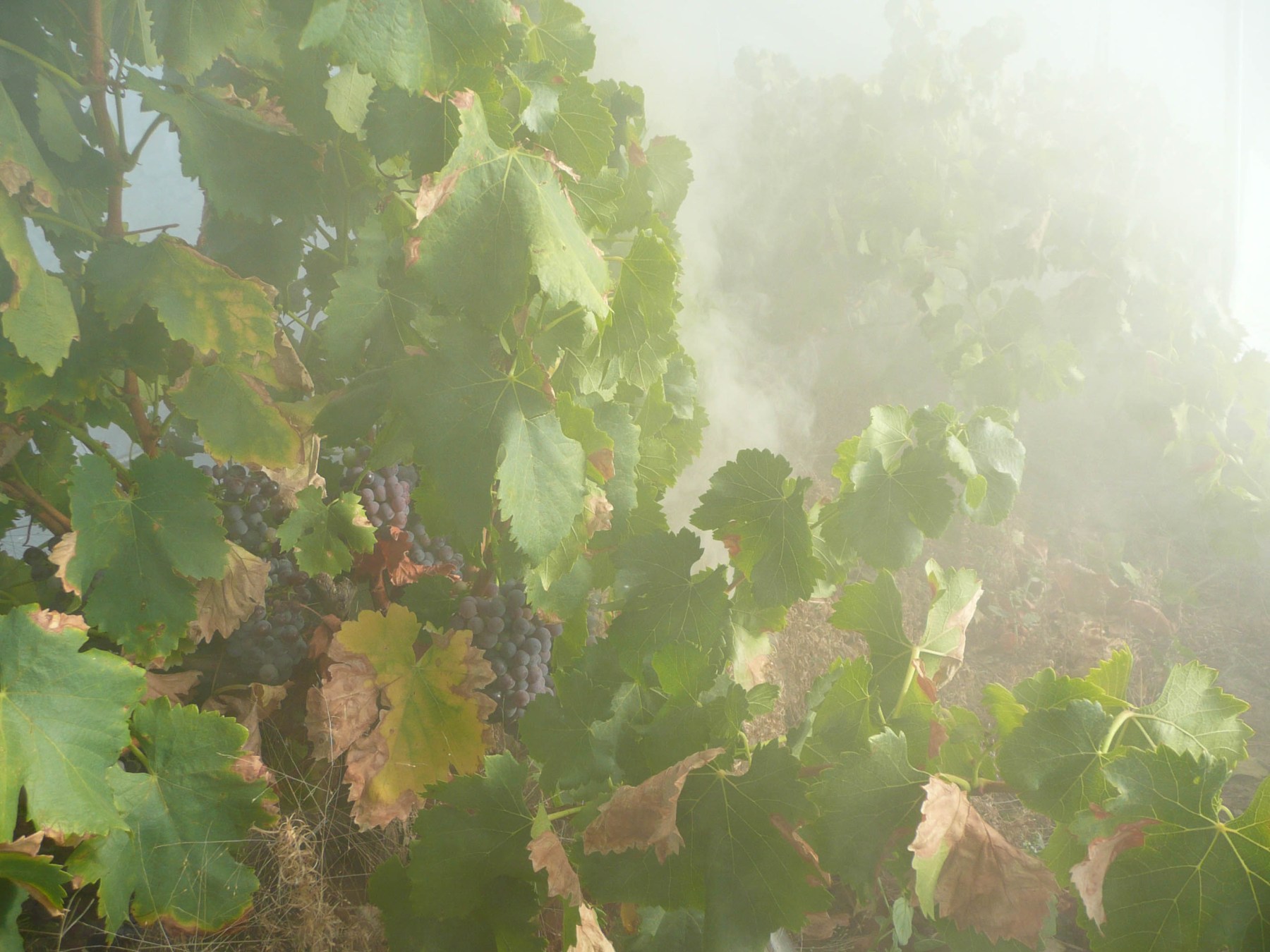
New research has found technology used to remove alcohol from wine could also help reduce the impacts of bushfire smoke taint, offering a potential lifeline for smoke‑affected vintages.
A study by the University of Adelaide has shown spinning cone column distillation, when combined with activated carbon treatment, achieved better outcomes than traditional remediation methods alone. The process reduced smoke‑related characters while preserving desirable fruity aromas.
Professor Kerry Wilkinson from the University’s School of Agriculture, Food and Wine said smoke taint remains a major challenge for wine producers as bushfires become more frequent.
“The global wine industry is navigating many climate‑related challenges, including the occurrence of smoke taint resulting from vineyard exposure to smoke from bushfires,” she said.
The technique works by separating alcohol and aroma compounds before treating the remaining wine to target smoke‑taint compounds, before recombining the components. Researchers found the final wine had improved fruit expression with less obvious smoke characteristics.
While the trial was conducted at pilot scale, researchers say commercial‑scale trials could confirm whether the approach is viable for broader industry use.