Energy analyst Tim Buckley says Australia is on the right track with renewable energy but warns the pace of change must accelerate to ensure grid reliability, affordability, and climate targets are met.
Speaking after Origin Energy announced a two-year extension for the Eraring coal-fired power station, Buckley criticised the decision as a short-term fix that highlights deeper issues in the energy transition.
“Coal is unreliable, expensive and destroying our planet,” he said. “We’ve had 20 outages at Callide C in Queensland in just four years. These end-of-life coal plants are the real reliability problem.”
Buckley pointed to record renewable energy figures in late 2025 as proof the grid can handle high levels of clean energy. Nationally, Australia hit 50.1 percent renewable energy share in the December quarter, and New South Wales reached 46.1 percent.
Buckley added that no major power outages were recorded as a result.
“We didn’t have major blackouts. The only blackout was caused by coal,” he said. “The myth that you can’t run a grid above 20 percent renewables is dead. South Australia averaged 72 percent renewables for the entire year without hydro support.”
Despite this progress, Buckley says delays and cost blowouts in major projects are slowing the transition. “Snowy Hydro 2.0 has been an absolute debacle, Project Energy Connect is massively over budget and behind schedule, and the Waratah super battery had transformer failures during testing,” he said. “These projects are critical for reliability. We need to build them faster.”
Buckley argues Origin Energy has failed to prepare for Eraring’s closure. “They’ve known for 41 years this plant had a 40-year life. Yet they’ve built no new renewable capacity in the last decade,” he said. “Instead, they’ve left it to governments and taxpayers to solve the problem while doing what’s in their economic self-interest.”
The extension will see Eraring operate at reduced capacity—around 20 to 25 percent—until April 2029, providing backup during peak demand. Buckley says this buys time to scale up renewables and storage. “We need to get batteries online, get Snowy Hydro online, and expand grid connections to accommodate electrification,” he said. “Australia spends $50 billion a year importing oil and diesel. Electrifying transport and homes will save that money, but it means we need a modernised grid.”
Buckley also took aim at New England MP Barnaby Joyce and other critics who claim renewables will hike power prices and undermine reliability. “Wholesale power prices dropped 28 percent year-on-year in the December quarter,” he said. “Renewables are the lowest-cost source of energy according to the CSIRO. Barnaby ignores both climate science and economics.”
Buckley praised recent federal initiatives, including the Albanese government’s expanded battery rebate scheme and upcoming free solar-sharing program. It saw Australians install 200,000 home batteries with a combined capacity of 4.7 gigawatt hours.
Buckley says these changes are already delivering results. “January’s heatwave saw Sydney hit 40 degrees at midnight, yet the grid held up and prices stayed low thanks to rooftop solar and batteries,” Buckley said. “Contrast that with coal plants, which fail catastrophically in extreme heat.”
For regional communities worried about transmission lines and wind farms, Buckley says farmers should have the right to benefit. “Five turbines can earn a farmer $150,000 a year for 30 years,” he said. “That diversifies income and builds resilience against droughts and floods. The NSW government has legislated compensation for farmers to ensure fairness.”
Buckley’s message is clear: Australia must “think China speed and scale” to secure energy independence, cut emissions, and lower costs. “We need to build the new before we turn the old off,” he said. “The solutions we dreamt of a decade ago are real, affordable and ready. We just need to get on and do it.”
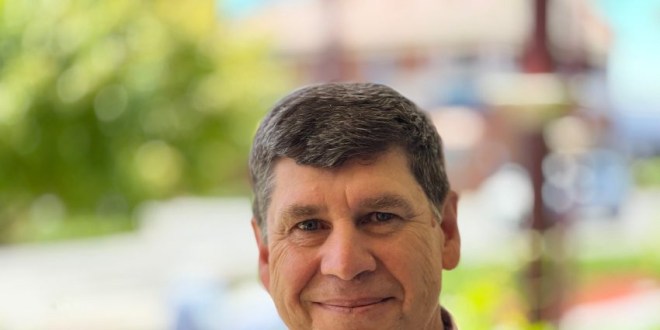
Tim Buckley is the Founder and Director of Climate Energy Finance.